Call or text us to register for lessons: 303-550-1081
Email us: Info@ParkerMusicAcademy.com

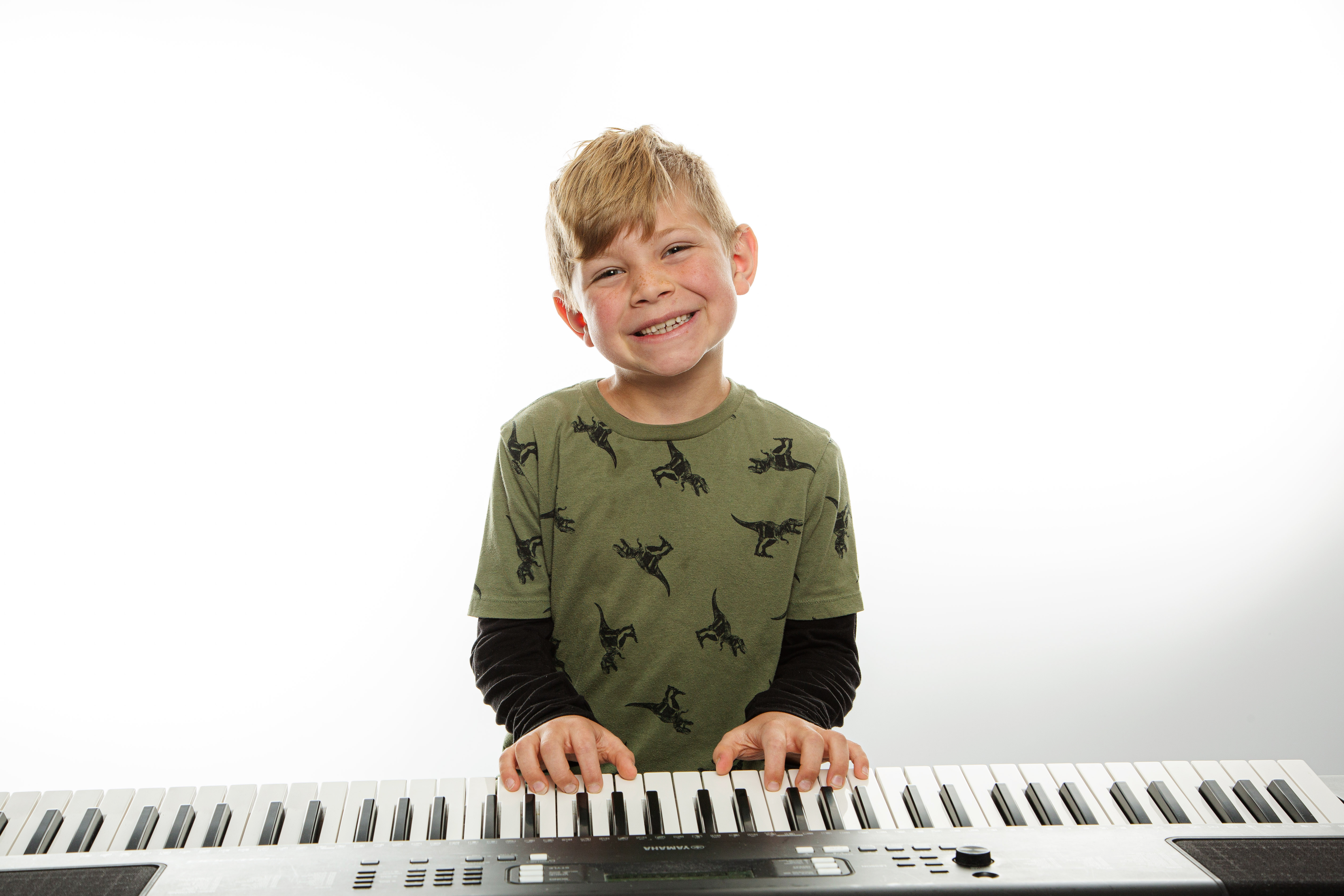
If you're looking into music lessons in Parker, CO for your child, you've probably wondered how much they should practice at home.
Maybe you've even asked their teacher:
“How many minutes a day should they be practicing?”
It's a good question.
But at Parker Music Academy, we like to look at it a little differently.
What if we used the word play instead?
Because kids don't need another thing that feels like homework.
They already have plenty of that.
School. Homework. Sports. Chores. Activities. Getting everyone out the door on time...
Music can be something different.
Music should be fun first.
Before we're worried about how many minutes a child spends at the piano or how many times they played through a guitar exercise, we want them to enjoy making music.
Because when kids enjoy playing, they are much more likely to keep doing it.
And that's where the magic happens.
The word “practice” can sometimes make music sound like work.
And while learning an instrument does take effort, that doesn't mean every time your child picks up an instrument needs to feel like an assignment.
Think about what happens when a child actually loves what they're doing.
They hear a song they like and want to learn it.
They figure out a new chord.
They play a rhythm on the drums.
They sing in the car.
They sit down at the piano and play something they've learned in their music lessons in Parker.
Nobody has to tell them to do it.
They're just playing.
That's exactly what we want to encourage.
Parents naturally want to see progress.
We understand that.
You want to know that your child's piano lessons, guitar lessons, voice lessons or drum lessons are helping them learn something.
And they are.
But progress doesn't always happen on the schedule we expect.
Some children pick up an instrument quickly.
Others need more time.
Some want to play every day.
Others go through phases.
One week your child may be completely obsessed with their guitar.
The next week, you may have to remind them where they left it.
That's okay.
Learning music is a long-term journey.
We don't want to turn something that could become a lifelong passion into something a child feels they have to “get through.”
There isn't one perfect answer.
For a beginning student, even 10 or 15 minutes of playing can be worthwhile.
Maybe they work on something from their last lesson.
Maybe they play a song they already know.
Maybe they spend five minutes trying to figure out a melody they heard.
Maybe they just have fun making noise.
Yes, even that can be part of learning.
As students become older and more experienced, they may naturally want to spend more time with their instrument.
That's wonderful.
But we don't need to force a five-year-old beginner to behave like a conservatory student.
Manage the expectations.
Start where your child is.
Let their interest grow.
Then build from there.
This is something we really want Parker parents to hear.
Your child does not need to sit down for an hour every day to benefit from music lessons.
For many beginners, short and positive sessions are a much better place to start.
A child who plays for 15 minutes and finishes thinking,
“That was fun!”
has had a successful music session.
That's more valuable to us than a child who is forced to play for 45 minutes and finishes thinking,
“I never want to do that again.”
Over time, those little positive experiences add up.
And eventually, 15 minutes might become 20.
Then 30.
Then maybe your child gets so involved in learning a song that they don't even notice how long they've been playing.
That's when you know something is clicking.
Piano is one of the most popular instruments for beginning students, and for good reason.
There is something very satisfying about sitting down and immediately being able to make a sound.
A beginning piano student can learn a simple melody, recognize notes, experiment with rhythms and gradually build more complicated skills.
But they can also just play.
Maybe they want to learn a song from a movie.
Maybe they want to figure out something they heard on the radio.
Maybe they want to make up their own song.
All of those experiences can help a child develop a relationship with the instrument.
That relationship matters.
The same thing applies to guitar.
Some kids are motivated by rock.
Others love country, pop, worship music or songs they hear their parents playing.
If your child is excited about the guitar, let that excitement work for you.
Learning a favorite song can be a powerful motivator.
Suddenly those chords have a purpose.
That rhythm has a purpose.
And the child isn't thinking about whether they're “practicing.”
They're thinking:
“I want to play this song.”
That's a much better place to learn from.
For kids taking voice lessons in Parker, CO, keeping things fun is just as important.
Singing should feel expressive.
Students can learn healthy technique, breathing, pitch and control while still singing music they actually enjoy.
And confidence matters here.
Standing up and singing in front of another person can be a big deal for a child.
Getting through that first song can be a huge accomplishment.
They don't need to be perfect.
They need to feel safe enough to try.
This may be the most important part.
You don't need to stand over your child every evening asking:
“Did you practice?”
“How long did you practice?”
“Did you finish everything your teacher assigned?”
We know you're trying to help.
But sometimes a little less pressure can create a lot more enjoyment.
Instead, try asking:
“What are you playing this week?”
Or:
“Want to play that song for me?”
Or even:
“I love hearing you play.”
Those questions change the feeling around music.
You're showing interest without making music another test your child has to pass.
It happens.
And it doesn't mean your child hates music.
They might be tired.
They might be frustrated.
They might not like the song they're working on.
They might have had a long day at school.
Or maybe they're just more interested in playing outside that day.
That's normal.
Try not to turn one missed day into a big deal.
Music is a long game.
There will be days when your child plays for an hour.
There will be days when they don't touch their instrument.
There will be days when they play one thing over and over again.
That's okay.
The goal is to keep the door open.
Teachers will always have things students need to learn.
There are fundamentals.
There are techniques.
There are skills that don't necessarily look exciting at first.
Those things matter.
But so does choice.
If your child loves a particular song, let them play it.
If they want to learn a melody that isn't part of their lesson, ask their teacher about it.
If they want to make up their own song, encourage them.
If they want to play the same song 14 times?
Well...
Maybe get a cup of coffee. 🙂
They're learning.
One of the best things we can give children is realistic expectations.
Learning an instrument takes time.
Your child probably won't sound like their favorite musician after three lessons.
They might not read music fluently right away.
They may forget something they knew last week.
They may struggle with a particular chord, rhythm or song.
None of that means they're failing.
It means they're learning.
A good music teacher in Parker understands that progress isn't always obvious from week to week.
Sometimes the biggest changes are happening quietly.
A student becomes a little more confident.
They stop being afraid of making mistakes.
They start listening more carefully.
They figure something out without help.
Then one day, they play a song that used to seem impossible.
Those moments are why we teach.
Performance can be another area where expectations matter.
Some children love being on stage.
Others get nervous just thinking about it.
That's okay.
Student recitals and performance opportunities can give students a chance to share what they've learned in a supportive environment.
The goal isn't perfection.
It's experience.
It's confidence.
It's being able to say:
“I was nervous, but I did it.”
That's a pretty important lesson.
And when a child walks off the stage with a huge smile on their face?
That's music education doing its job.
When parents search for the best music lessons in Parker, it's easy to compare teachers, schedules, prices and instruments.
Those things matter.
But we'd encourage you to ask one more question:
“Will my child actually enjoy being here?”
Because enjoyment can be the difference between a short-term activity and a lifelong relationship with music.
At Parker Music Academy, we've been helping students discover and develop their musical abilities for years. We offer private lessons for children, teens and adults in piano, guitar, voice, drums, violin, cello, bass, ukulele and more.
We also know that Parker families are busy.
That's why having lesson options that can fit into real family schedules is important.
Of course we want students to improve.
We want them to learn.
We want them to become confident musicians.
But we'd also like them to have fun along the way.
We want a child to get excited when they see their instrument.
We want them to tell you about something cool they learned in their lesson.
We want them to play a song for their family.
We want them to make mistakes and laugh.
We want them to keep going when something is difficult.
And maybe most importantly, we want them to eventually pick up their instrument because they want to.
Not because somebody told them to.
Sure.
But maybe call it play.
There will absolutely be times when a student needs to work through something difficult.
There will be skills that require repetition.
There will be assignments from their teacher.
That's part of learning.
But those things don't have to take the fun out of music.
Start small.
Keep expectations realistic.
Let your child choose some of what they play.
Celebrate progress instead of perfection.
And give them permission to enjoy themselves.
Fun first. Progress follows.
That's the kind of music education we believe in.
If you've been searching for music lessons in Parker, CO, Parker music lessons, kids music lessons in Parker, or music lessons near me, we'd love to meet your family.
Parker Music Academy offers private music lessons for kids, teens and adults, with instruction in piano, guitar, voice, drums, violin, cello, bass, ukulele and more.
Whether your child is picking up an instrument for the very first time or already has years of experience, we're here to help them learn, grow and—most importantly—enjoy making music.
Give us a call or text 303-550-1081 to learn more about music lessons at Parker Music Academy.
Your child doesn't have to be perfect.
They don't have to practice for an hour.
They don't even have to know what kind of musician they want to become yet.
They just have to start.
And then...
let them play.
Easy to enroll on the phone, spots fill up first come first served!
Lessons are available seven days a week.
OR CALL US TODAY TO ERNOLL IN JUST A FEW MINUTES!
303-550-1081
